
Immunohistochemistry Kits and Reagents


Biolegend Retrieve-All Antigen Unmasking #1: Universal 100X
Retrieve-All Antigen Unmasking #1: Universal 100X Apps: IHC; Size: 50 mL


Biotium CD25(IL2RA/423), CF594 conjugate, 0.1mg/mL
Recognizes a protein of 55 kDa, identified as CD25. It is expressed on activated T- and B-cells and activated monocytes/macrophages. With respect to lymphomas, CD25 is present on malignant cells of Hodgkin's disease, HTLV-1 adult T-cell leukemia, cutaneous T-cell lymphoma, and hair cell leukemia. Increased levels of soluble CD25 are observed in the leukemias/lymphomas and inflammatory/ autoimmune diseases. CD25 molecule alone appears to function as a low affinity receptor and associates with CD122 (IL-2R beta chain, p75) and CD132 (common gamma chain) to form the high affinity IL-2 receptor complex. CD25 antibodies detect three epitope regions, A, B and C. This MAb recognizes the epitope B, which is located at residue 3-104 of CD25 and doe not block IL-2 binding to CD25.Primary antibodies are available purified, or with a selection of fluorescent CF Dyes and other labels. CF Dyes offer exceptional brightness and photostability. Note: Conjugates of blue fluorescent dyes l
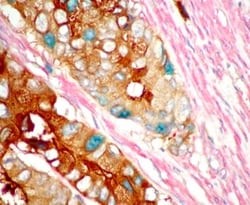
Abcam TripleStain IHC Kit: M&M&R on Human tissue (DAB, AP/Red & HRP/Green), 18ML
Abcam's TripleStain IHC kit (ab183286) is designed to use with user supplied two mouse primary antibodies and one rabbit primary antibody to detect three distinct antigens on a single human tissue or cell samples.
The product is subject to the following: Abcam Restricted Use Statement

Medchemexpress LLC PDK1 Human sf9 Hi 50ug

PDK1 protein is a key kinase that controls glucose and fatty acid metabolism by phosphorylating pyruvate dehydrogenase subunits PDHA1 and PDHA2 This molecular switch inhibits pyruvate dehydrogenase fine-tunes metabolite flux and downregulates aerobic respiration PDK1 Protein Human (sf9 His) is the recombinant human-derived PDK1 protein expressed by Sf9 insect cells with N-His labeled tag

Medchemexpress LLC Recombinant rat discoidin domain receptor 1 (DDR1), C-terminal His tag | 5 UG
Recombinant rat discoidin domain receptor 1 (DDR1) protein expressed in HEK293 cells with a C-terminal His tag. The protein is intended for in vitro research of DDR1-mediated collagen binding and downstream signaling, including SRC and MAP kinase pathways, as well as matrix remodeling and cell migration. Supplied as a purified recombinant protein for biochemical and cell-based assays.
- Recombinant rat DDR1 expressed in HEK293 cells.
- C-terminal His tag for detection and purification.
- Supports studies of collagen binding and downstream signaling pathways.
- Suitable for biochemical assays and cell-based applications.
- Available in multiple microgram and milligram sizes for experimental flexibility.
ABclonal Technology Claudin 6 Rabbit mAb
Tight junctions represent one mode of cell-to-cell adhesion in epithelial or endothelial cell sheets forming continuous seals around cells and serving as a physical barrier to prevent solutes and water from passing freely through the paracellular space These junctions are comprised of sets of continuous networking strands in the outwardly facing cytoplasmic leaflet with complementary grooves in the inwardly facing extracytoplasmic leaflet This gene encodes a component of tight junction strands which is a member of the claudin family The protein is an integral membrane protein and is one of the entry cofactors for hepatitis C virus The gene methylation may be involved in esophageal tumorigenesis This gene is adjacent to another family member CLDN9 on chromosome 16
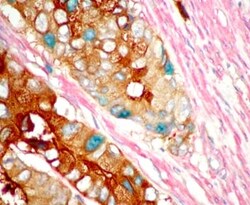
Abcam TripleStain IHC Kit: M&M&R on Human tissue (DAB, AP/Red & HRP/Green), 60ML
Abcam's TripleStain IHC kit (ab183286) is designed to use with user supplied two mouse primary antibodies and one rabbit primary antibody to detect three distinct antigens on a single human tissue or cell samples.
The product is subject to the following: Abcam Restricted Use Statement
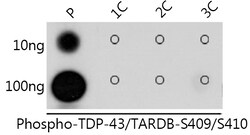
ABclonal Technology Phospho-TDP-43/TARDBP-S409/S410 Rabbit pAb
HIV-1, the causative agent of acquired immunodeficiency syndrome (AIDS), contains an RNA genome that produces a chromosomally integrated DNA during the replicative cycle. Activation of HIV-1 gene expression by the transactivator Tat is dependent on an RNA regulatory element (TAR) located downstream of the transcription initiation site. The protein encoded by this gene is a transcriptional repressor that binds to chromosomally integrated TAR DNA and represses HIV-1 transcription. In addition, this protein regulates alternate splicing of the CFTR gene. A similar pseudogene is present on chromosome 20.
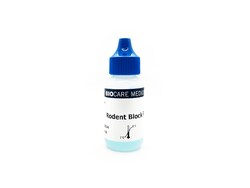
Biocare Medical, LLC Rodent Block R - 25 ml
Rodent Block R is an immunohistochemical reagent designed for blocking endogenous rat IgG and non-specific background in rat tissues and red blood cells. After the application of Rodent Block R, a mouse monoclonal antibody can be applied. It can also be used on an automated staining system.
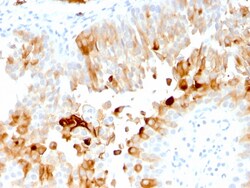
Biotium Uroplakin 1A (Urothelial Differentiation Marker)(UPK1A/2921), CF740 conjugate, 0.1mg/mL
The protein encoded by this gene is a member of the transmembrane 4 superfamily, also known as the tetraspanin family. Most of these members are cell-surface proteins that are characterized by the presence of four hydrophobic domains. The proteins mediate signal transduction events that play a role in the regulation of cell development, activation, growth and motility. This encoded protein is found in the asymmetrical unit membrane (AUM) where it can complex with other transmembrane 4 superfamily proteins. It may play a role in normal bladder epithelial physiology, possibly in regulating membrane permeability of superficial umbrella cells or in stabilizing the apical membrane through AUM/cytoskeletal interactions. The protein may also play a role in tumor suppression. Primary antibodies are available purified, or with a selection of fluorescent CF Dyes and other labels. CF Dyes offer exceptional brightness and photostability. Note: Conjugates of blue fluorescent dyes like
Biotium Ksp-Cadherin / CDH16(CDH16/1071), CF740 conjugate, 0.1mg/mL
This MAb recognizes a protein of 130 kDa, identified as Ksp-cadherin. Cadherins form a superfamily of related glycoproteins that mediate calcium-dependent cell adhesion and transmit signals from the extracellular matrix to the cytoplasm. Cadherins have been implicated in embryogenesis, tissue morphogenesis, tissue structure maintenance, cell polarization, neoplastic invasiveness and metastasis, and membrane transport. It is suggested that Ksp-cadherin is a marker for terminal differentiation of the basolateral membranes of renal tubular epithelial cells. Within the kidney, Ksp-Cadherin is found exclusively in the basolateral membrane of renal tubular epithelial cells and collecting duct cells, and not in glomeruli, renal interstitial cells, or blood vessels. Ksp-Cadherin has been suggested to distinguish Chromophobe Renal-Cell Carcinoma from Oncocytoma.Primary antibodies are available purified, or with a selection of fluorescent CF Dyes and other labels. CF Dyes offer except
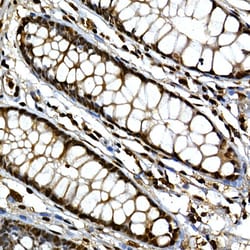
ABclonal Technology GLI3 Rabbit pAb
This gene encodes a protein which belongs to the C2H2-type zinc finger proteins subclass of the Gli family. They are characterized as DNA-binding transcription factors and are mediators of Sonic hedgehog (Shh) signaling. The protein encoded by this gene localizes in the cytoplasm and activates patched Drosophila homolog (PTCH) gene expression. It is also thought to play a role during embryogenesis. Mutations in this gene have been associated with several diseases, including Greig cephalopolysyndactyly syndrome, Pallister-Hall syndrome, preaxial polydactyly type IV, and postaxial polydactyly types A1 and B.
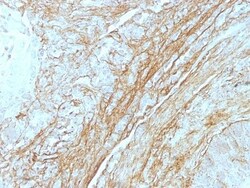
Biotium Tenascin(T2H5), CF594 conjugate, 0.1mg/mL
In Western blotting, this antibody reacts with two bands of ~MW of 210 kDa and 300 kDa, identified as two isoforms of Tenascin C. Specificity of this MAb is validated by sequential immunoprecipitation with a PAb against Tenascin C. Tenascin C is a multifunctional, disulfide-linkedhexameric extracellular matrix glycoprotein expressed in association with mesenchymal epithelial interactions during development and in the neo-vasculature and stroma of undifferentiated tumors. In adults, it is restricted to certain epithelial-stromal interfaces and increases markedly in hyper-proliferative diseases and in stroma of many neoplasms, including gliomas, breast, squamous and lung carcinomas.Primary antibodies are available purified, or with a selection of fluorescent CF Dyes and other labels. CF Dyes offer exceptional brightness and photostability. Note: Conjugates of blue fluorescent dyes like CF405S and CF405M are not recommended for detecting low abundance targets, because blue
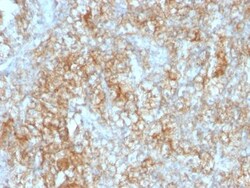
Biotium CD147(8D6), CF594 conjugate, 0.1mg/mL
This MAb recognizes extracellular epitope 2 within the N-terminal Ig domain of human CD147. It is expressed more intensely on thymocytes than on mature peripheral blood T cells. CD147 is important in spermatogenesis, embryo implantation, neural network formation, and tumor progression. It stimulates the production of interstitial collagenase, gelatinase A, stromelysin-1 and various metalloproteinases (MMPs) by fibroblasts. These enzymes are important factors in cancer invasion and metastasis.Primary antibodies are available purified, or with a selection of fluorescent CF Dyes and other labels. CF Dyes offer exceptional brightness and photostability. Note: Conjugates of blue fluorescent dyes like CF405S and CF405M are not recommended for detecting low abundance targets, because blue dyes have lower fluorescence and can give higher non-specific background than other dye colors.
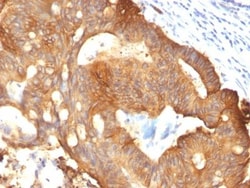
Biotium Cytokeratin 8(B22.1), CF740 conjugate, 0.1mg/mL
Cytokeratin 8 (CK8) belongs to the type II (or B or basic) subfamily of high molecular weight cytokeratins and exists in combination with cytokeratin 18 (CK18). CK8 is primarily found in the non-squamous epithelia and is present in majority of adenocarcinomas and ductal carcinomas. It is absent in squamous cell carcinomas. Hepatocellular carcinomas are defined by the use of antibodies that recognize only cytokeratin 8 and 18. CK8 exists on several types of normal and neoplastic epithelia, including many ductal and glandular epithelia such as colon, stomach, small intestine, trachea, and esophagus as well as in transitional epithelium. Anti-CK8 does not react with skeletal muscle or nerve cells. Epithelioid sarcoma, chordoma, and adamantinoma show strong positivity corresponding to that of simple epithelia (with antibodies against CK8, CK18 and CK19). Reportedly, anti-CK8 is useful for the differentiation of lobular (ring-like, perinuclear) from ductal (peripheral-predominant)